


Extend Your Protection to 12 Years
Leading manufacturers like Worcester Bosch and Ideal now offer extended warranties (from 8 up to 12 years) when a branded magnetic filter is installed. It’s an investment that pays for itself in peace of mind.
Extra Coverage
What is a Magnetic Filter?
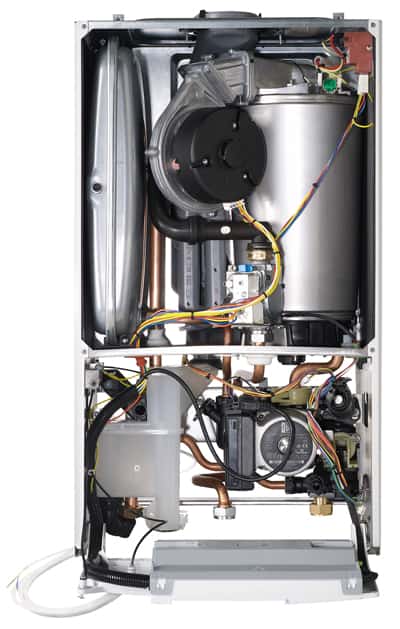
Typically installed on the return pipe of your central heating, these filters are designed to capture magnetic debris before it enters the boiler’s heat exchanger—preventing long-term damage and costly repairs.
While filters aren’t a fix for a dirty system on their own, a filter added to a properly flushed system (which we do on every installation) is the ultimate protection for your new boiler.
Mammoth Warranty Coverage
All new central heating boilers come with a manufacturer’s warranty, ranging from 1 to 15 years. During this period, the manufacturer covers all parts and labour required to keep your system running.
The Warranty Rule
To keep your protection valid, you must have your boiler serviced annually.
View Service Plans Reasonable rates available!Mammoth Warranty Coverage
All new central heating boilers installed by Kassgas come with a manufacturer’s warranty ranging from 1 to 15 years. During this time, the manufacturer covers all parts and labour required to keep your system operational.
Note: Manufacturers have specific terms and conditions. We recommend checking their official websites for full details.
The “Valid Warranty” Rule
To ensure your 15-year protection remains active, you must have your boiler serviced annually.
Check Servicing Prices Affordable plans available nowBoilers Under Warranty
If your boiler is currently under manufacturer warranty, an annual service is a strict requirement to keep your protection valid.
You can often contact the manufacturer to reinstate your warranty, though charges will apply.
Boilers Out of Warranty
Even without a warranty to protect, an annual service is highly recommended for two vital reasons:
- 🛡️ Safety: Ensuring no carbon monoxide risks.
- 📉 Efficiency: Keeping your energy bills low.
Warranty, Warranty & Once More: WARRANTY!
In our opinion, the warranty length is the most important factor when choosing a boiler. If a manufacturer is willing to cover all parts and labour for a decade, they are telling you exactly how much they trust their own engineering.
The “No-Brainer” Scenario
Compare these two options. Which is the smarter investment for your home?
Boiler A
A well-known brand recommended by family, but with higher costs and less coverage.
Boiler B
Similar performance, lower price, and 3 extra years of total peace of mind.
Put £300 back in your pocket.
By choosing Boiler B, you get more protection for less money. That’s £300 extra for your summer holiday while your home stays warm and protected for longer. It’s a no-brainer!
Should I Repair or Replace My Boiler?
It’s the age-old question. At Kassgas, we believe in honest advice over a quick sale. Here is how we break down the “Repair vs. Replace” math:
The “Tipping Point”
If your combi is over 8 years old, we generally advise against repairs exceeding £200.
Average lifespans are 8–12 years. At this age, parts are reaching their limit. Replacing one often just delays the next failure.
Worth the Investment?
If you’ve looked after it with regular servicing, we’re happy to help you keep it going.
On a well-maintained system, spending £200–£300 to keep the “old girl” going is a solid bet. Any higher, and an upgrade becomes the smarter financial move.
Need a temporary fix?
We understand that a £1,300+ installation isn’t always in the budget immediately. If you need a minor repair to keep the boiler chugging along while you source some moolah for an upgrade, we can help.
How to Bleed Your Radiators
Are your radiators cold at the top? There’s no need to panic—they likely just need bleeding. You only need one tool: a radiator bleed key, available at any hardware store for about £1.
Check Boiler Pressure
If you have a combi boiler, ensure your pressure is between 1 and 2. Use your filling loop to add pressure if it’s too low. (System boiler owners can skip to Step 2).
Open Downstairs Valves
Using your bleed key and a bit of tissue, open the bleed valve (top left or right) on each downstairs radiator. Hold until water squirts out, then close it. If water comes out immediately, the radiator was already full.
Intermediate Pressure Check
Check your boiler pressure again. You will likely have lost some pressure during the process; top it back up to between 1 and 2 if necessary.
Repeat Upstairs
Move upstairs and repeat the same process for all radiators until water squirts from every single one.
Final Top-Up
Go back to your boiler and ensure the pressure gauge is between 1 and 2. Note: If you have tanks in the loft (Open Vent System), they will refill themselves automatically.
Still having issues?
If cold spots return within a few weeks or months, you may have a system leak or require a professional system flush to remove internal sludge.
Is Your Engineer Legitimate?
Whether you call us a “Gas Fitter,” a “Plumber,” or a “Gas Engineer,” one thing is vital: The credentials must be modern.
The term “CORGI Engineer” was officially replaced by the Gas Safe Register in 2009. Any company still using the CORGI title as their primary gas qualification may not be legally registered to work in your home.

Verify Before You Book
Never take a gas engineer’s word for it. Always check that your contractor is on the official register for the safety of your family and property.
Search the Official Register Kassgas Ltd is fully Gas Safe Registered.Do I need new radiators with my new boiler?
It’s one of our most common questions. The answer depends on your current system’s health and efficiency goals.
Stick with your current units if…
As a general rule, if your radiators currently get nice and warm (or did before the boiler failed), you do not have to replace them when installing a new combination boiler.
Consider replacing if…
We recommend an upgrade if you have old-style radiators without internal fins or units that are undersized for the room, as this will prevent your new boiler from running at peak efficiency.
Wired, Wireless, or Smart?
With hundreds of models available, choosing a thermostat can feel daunting. We’ve broken the options down into four simple categories to help you decide.
Wired Controls
The most basic option. A fixed box wired directly to your boiler. Reliable and budget-friendly, though the cabling can sometimes be unsightly.
Best for: Budget-conscious basic controlWireless Controls
Features a portable thermostat on a stand and a receiver at the boiler. Move it from room to room—perfect for staying warm while you recover from a sick day.
Best for: Flexibility without the wiresSmart Thermostats
Ultimate control via your smartphone. These “learn” your routines and house efficiency to save you money and carbon in the long run.
Best for: Energy savings & tech-loversManufacturer Controls
Branded controls (like Worcester or Ideal) that are often covered by your 12-year boiler warranty for total peace of mind.
Best for: Maximum warranty protectionWhat to Expect on Installation Day
We know having a new boiler fitted is a big deal. Here is how a typical day looks when the Kassgas team arrives at your door.
Arrival & Walkthrough
We arrive between 8-9am. After introductions, we’ll do a full walkthrough of your chosen system, confirming where everything goes and any visible alterations needed.
☕ Best time for a tea/coffee and maybe a biscuit!Protecting Your Home
Dust sheets go down wherever we work. We’ll fill buckets for the toilet and the kettle before the water is turned off—we think of the small details so you don’t have to.
The Installation Begins
We’ll need access to all rooms to drain the radiators (including waking up any sleeping teenagers!). We’ll keep you informed throughout the day on our progress and water status.
Testing & Training
Once the boiler is running, we wait for the system cleaner to work its magic. During this time, we’ll sit down and show you exactly how to use your new boiler and thermostat.
The Final Polish
We do a final drain and flush to ensure your system water is crystal clean. Then, we remove all waste, tools, and materials, followed by a full clean of our work areas.
A Warm Home & A Happy Smile
We say our goodbyes, politely ask for a review, and leave you with a warm home and a head full of knowledge. Job done!
What is a TRV?
TRV stands for Thermostatic Radiator Valve. Usually found in white or chrome, these clever devices sense the air temperature in a room and automatically shut off the hot water flow once your desired comfort level is reached.
The Number Guide
Not sure what setting to choose? Here is the rough temperature guide for most standard valves:
Individual Comfort
While your main boiler thermostat controls the overall house, TRVs allow you to set different temperatures for different rooms—saving energy in rooms you aren’t using.
The “Open” Radiator
Ever wonder why your bathroom radiator doesn’t have a TRV? This acts as a safety bypass, ensuring the boiler can always circulate excess heat even if all other valves are closed.
Professional Gas Cooker Installation
Installing a gas cooker is a precision job that requires strict adherence to safety regulations. At Kassgas, we ensure your new appliance is safe, level, and fully certified.
Tightness Testing & Removal
We begin with a gas tightness test to ensure your property is leak-free. We’ll then safely disconnect and remove your old appliance.
Connection & Safety
After connecting the gas and electrics, we perform a second tightness test. We also install a stability chain to prevent the cooker from tipping—a vital safety rule for homes with children.
Levelling & Efficiency
The unit is precision-leveled. We then test the flame picture and gas consumption to ensure the appliance is running at peak efficiency.
Carbon Monoxide: The Silent Killer
Carbon Monoxide (CO) is an odourless, colourless, and tasteless gas produced when fuels like gas, oil, coal, and wood fail to burn completely. Because it is impossible to detect with human senses, it is extremely dangerous in enclosed spaces.
Is Your Home Protected?
The three main sources of combustion in most UK homes are Boilers, Fires, and Cookers. While modern appliances have safety features, any unit that is improperly installed, poorly maintained, or faulty can cause serious harm or even death.
Smart Placement Tips
- Place alarms approx. 5 feet from the floor.
- Avoid placing directly above fireplaces or stoves.
- Always follow the specific manufacturer’s instructions.
Professional Alarm Installation
Don’t leave your family’s safety to chance. We provide and professionally install high-quality Carbon Monoxide alarms for total peace of mind.
📞 Call 0330 058 9419 to BookWhat Does a New Boiler Actually Cost?
A new boiler is a significant expense and often happens at the worst time. Let’s be honest: it’s not something you can show off to friends, but it’s the one part of your home you simply cannot do without when winter arrives.
| Installation Type | Essential Range (Budget Models) |
Premium Range (7-12 Year Warranty) |
|---|---|---|
| Combi-to-Combi Swap Replacing an existing combi unit. |
From £1,200 | From £1,600 |
| System Conversion Removing your old hot water cylinder. |
From £1,700 | From £2,100 |
| Heat-Only Swap Keeping your existing cylinder. |
From £1,200 | From £1,500 |